Environmental Phase One Guide for Land Buyers
Use this environmental phase one guide to spot liability, scope diligence, and protect land deals before earnest money, engineering spend, and commitments.
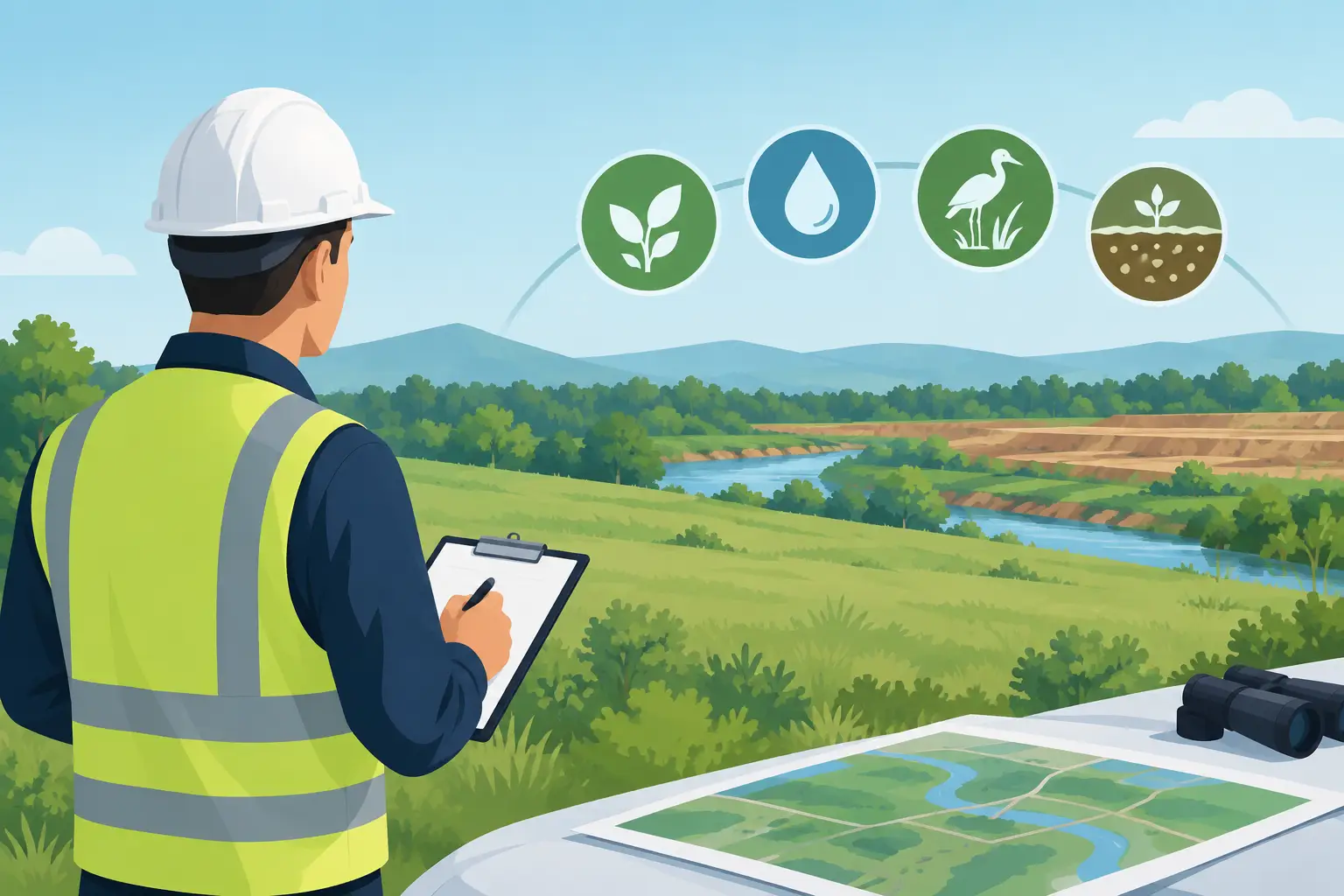
A clean-looking tract can still carry an environmental problem that changes the entire deal. A former gas station next door, a buried burn pit, an old agricultural chemical shed, or fill placed decades ago can create liability, delay financing, and make a well-priced parcel expensive overnight. This environmental phase one guide explains what a Phase I Environmental Site Assessment actually does, what it does not do, and how to use it before capital gets committed.
For acquisition teams, the point is not to collect another report. The point is to identify recognizable environmental conditions early enough to price the risk, negotiate around it, investigate further, or walk away.
What a Phase I Environmental Site Assessment Does
A Phase I Environmental Site Assessment, commonly called a Phase I ESA, is a records-based and site-based review of potential environmental contamination risks. It is typically performed to meet the Environmental Protection Agency's All Appropriate Inquiries standard and support certain federal liability protections under CERCLA, the federal Superfund law.
The assessment is not a test of soil, groundwater, vapor, or building materials. It is a professional opinion based on historical research, regulatory records, interviews, and a visual site reconnaissance. The environmental professional is looking for evidence that a release may have occurred, could have occurred, or requires further investigation.
For a land buyer, the practical question is simpler: is there enough evidence of a potential problem that the property needs a Phase II investigation, a deal adjustment, or a different site plan?
A Phase I should be ordered early in the diligence period, not after civil engineering, survey work, and land planning are already underway. If the report finds a recognized environmental condition, you need time to respond without letting a due-diligence deadline force a bad decision.
The Findings That Matter Most
Phase I reports use terms that can sound technical but have direct acquisition consequences. The key is knowing which findings create a real decision point.
Recognized Environmental Conditions
A Recognized Environmental Condition, or REC, is the central finding to watch. It generally means the environmental professional identified a known release, a likely release, or a material threat of a release involving hazardous substances or petroleum products.
A REC does not prove contamination. It does mean the available evidence is sufficient to justify additional inquiry. That may be a limited sampling program around a former underground storage tank, soil borings in an old industrial area, or groundwater testing where a dry cleaner operated nearby.
For a developer, a REC should trigger a scope, cost, and schedule conversation immediately. Ask where the concern is located, what media may be affected, whether it sits inside the proposed development footprint, and what a Phase II is likely to cost. A concern in an inaccessible edge area may be manageable. A concern under planned residential lots, a detention pond, or a proposed building pad is a different problem.
Historical RECs and Controlled RECs
A Historical Recognized Environmental Condition, or HREC, refers to a past release that was addressed to standards acceptable at the time, without controls that remain relevant to the property. A Controlled REC, or CREC, generally means contamination was addressed but remains subject to controls such as land-use restrictions, engineering controls, or ongoing monitoring.
Neither finding should be dismissed because the word “historical” or “controlled” appears in the label. A CREC can constrain excavation, disposal of soils, residential use, vapor mitigation, or future site improvements. The recorded documents, closure letters, and restrictions matter as much as the Phase I conclusion.
Business Environmental Risks
A Phase I may also identify business environmental risks that fall outside the strict CERCLA framework. These can include asbestos-containing materials, lead-based paint, wetlands, mold, radon, lead in drinking water, or compliance issues involving fill and debris.
These issues may not create the same statutory liability concern as a REC, but they can still affect budget and schedule. On raw land, uncontrolled fill, demolition debris, and unpermitted dumping often deserve more attention than buyers give them during an initial site walk.
What Goes Into a Phase I ESA
A credible Phase I follows a defined process, commonly aligned with ASTM E1527-21. The work normally includes a review of historical sources, federal and state environmental databases, local records where available, site reconnaissance, interviews, and an environmental lien and activity-use limitation search.
Historical research can include aerial photographs, topographic maps, fire insurance maps, city directories, and prior reports. These sources help establish whether the property or adjoining land was used for activities such as auto repair, fuel distribution, manufacturing, agricultural chemical storage, landfilling, or dry cleaning.
The site inspection matters because records are incomplete. An experienced assessor may spot stained soil, stressed vegetation, vent pipes, drums, transformers, fill material, abandoned structures, or evidence of dumping that does not appear in a database search.
Still, a Phase I is only as useful as its scope and timing. If the consultant cannot access the full tract, cannot inspect a locked building, or receives no useful information from the owner, the report should clearly state that limitation. Buyers should treat meaningful access limitations as unresolved diligence, not fine print.
When a Phase I Is Worth Ordering
For most commercial, multifamily, industrial, subdivision, and mixed-use acquisitions, a Phase I is standard risk management. It is particularly valuable when the purchase involves debt financing, institutional equity, a previous commercial use, or a site with uncertain history.
Raw land is not automatically low risk. Former agricultural properties may have pesticide or herbicide concerns. Rural tracts may contain undocumented dumping, burn areas, scrap operations, fuel tanks, or imported fill. Parcels along rail corridors, old highways, and former industrial edges deserve careful review even when the current use is woods or pasture.
There are deals where a Phase I may be disproportionate to the risk, such as a low-value purchase with no financing and a well-documented residential history. That is a business judgment, not a shortcut. The cost of a report should be weighed against the land basis, intended use, financing requirements, and the buyer's tolerance for unknown cleanup exposure.
How to Use the Report in Your Acquisition Workflow
Do not treat the Phase I as a standalone deliverable that arrives near the end of diligence. Put it beside the rest of the site intelligence: FEMA flood zones, wetlands, topography, utilities, zoning, access, prior uses, earthwork quantities, and preliminary sitework costs.
A parcel with a REC may still be a good acquisition if the risk is bounded and the economics support it. But the cost model has to reflect the likely next step. Include Phase II sampling, consultant management, possible remediation, soil handling, disposal, schedule contingency, and lender or equity conditions. If the potential impact cannot be estimated, preserve enough diligence runway to define it.
The strongest acquisition teams create a clear decision path. A clean Phase I supports progression. A limited REC leads to a targeted Phase II scope. A broad, poorly defined concern may justify a price reduction, a seller-funded investigation, an extended diligence period, or termination.
Land Takeoffs can help teams evaluate environmental layers alongside terrain, infrastructure, parcel research, preliminary sitework quantities, and financial assumptions. That integration matters because environmental risk is rarely isolated. A constrained area can affect grading, stormwater placement, utility routing, lot yield, and ultimately the return on the deal.
Questions to Ask Before You Accept the Report
Before closing the environmental file, ask whether the report covers the correct legal parcel and acreage, whether all relevant areas were accessible, and whether adjoining properties were reviewed with enough depth. Confirm the report identifies the intended user and can be relied on by the buyer and lender if needed.
If a REC is identified, ask the consultant to explain it in plain deal terms. What is the suspected source? What contamination is plausible? Where should samples be collected? Is the concern likely to affect the proposed use? What approvals, cleanup standards, or institutional controls could apply?
Also check the report date. Phase I reliance has timing requirements, and several components must be updated within specified periods before closing. A report ordered too early can become stale while a delayed entitlement or financing process runs its course.
A Phase I ESA will not make a difficult site easy. It will give you a better basis to decide whether the risk belongs in the deal, in the price, or somewhere else entirely.
Get these quantities from your own plan set
Land Takeoffs reads stamped civil plan sets and CAD files (PDF, DWG, DXF, LandXML) and returns cut and fill, storm, sewer, water and paving quantities, each with the sheet it came from. Your first takeoff is free.
Start a free takeoffUse it in Claude or ChatGPT